Are you missing one or more teeth? You might assume dentures are your only option, but modern dentistry has come a long way. Dental implants offer natural-looking, permanent replacement teeth that won't shift when you talk or eat and they can replace anything from a single tooth to a full mouth of them. Beyond restoring your smile, implants help protect your long-term oral health in ways other tooth-replacement options simply can't. Here's what you need to know about how implants work and why so many patients are choosing them.
A dental implant is a small titanium post that's surgically placed into your jawbone to act as a replacement tooth root. Once it's healed and fused with the bone, a custom-made crown is attached on top, giving you a replacement tooth that looks, feels, and functions like the real thing.
Unlike dentures, which rest on the gums, or bridges, which rely on neighbouring teeth for support, implants stand on their own. That independence is what makes them such a strong long-term solution.
People look into replacing missing teeth for all sorts of reasons restoring chewing function, regaining confidence in their smile, or preventing the oral health problems that come with leaving gaps untreated. While dentures and bridges have their place, implants tend to be the patient favourite, and for good reason.
A common concern with dentures is that they allow the jawbone to deteriorate over time. Because they sit on top of the gums, they don't stimulate the bone underneath, which leads to gradual bone loss and can even alter your facial structure. Bridges have their own drawback: securing the artificial tooth requires grinding down the surrounding healthy teeth and capping them with crowns, which damages otherwise perfectly good teeth.
Dental implants avoid both of these issues. They anchor directly into the jawbone without affecting neighbouring teeth, and they actively stimulate the bone the way a natural tooth root would.
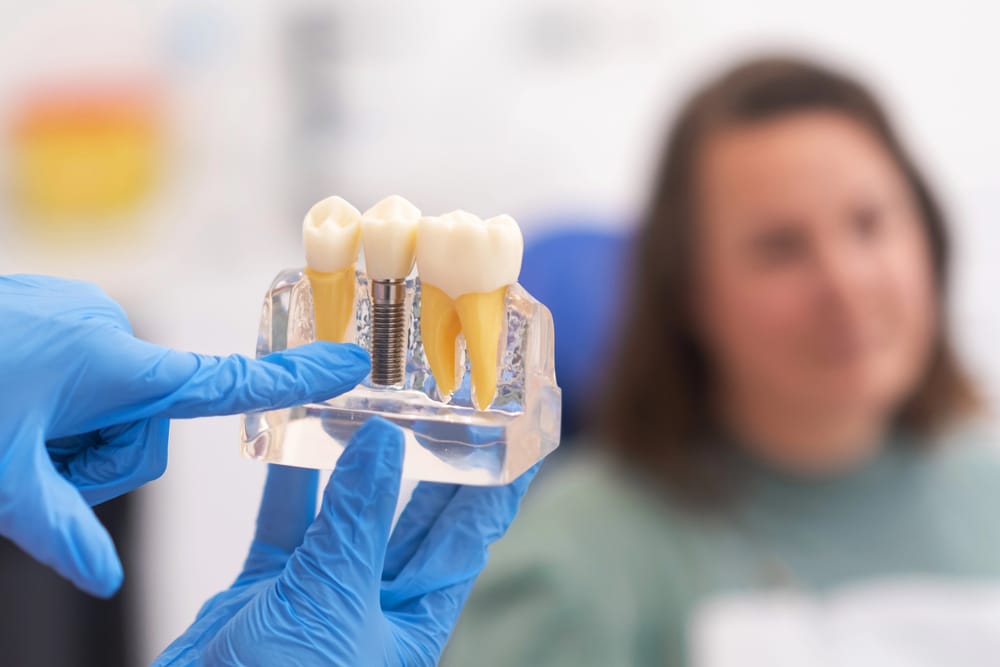
One of the biggest hesitations patients have about implants is not knowing what to expect from them day-to-day. The good news? They work just like your real teeth. You can chew your favourite foods, brush, and floss exactly as you always have — no special routines, no removing them at night. With proper care, dental implants can last the rest of your life, making them far more permanent than a bridge.
When a tooth is missing, the jawbone in that area no longer gets the stimulation it needs to stay healthy. The first year sees the most significant bone loss, with deterioration continuing more gradually after that. Every time you chew with a dental implant, you're stimulating the jawbone and helping to preserve it.
This matters for more than just your teeth. Significant bone loss can cause your face to sag and age prematurely — think wrinkles around the mouth, thinner lips, or a more pointed chin. By keeping the jawbone strong, implants help maintain your natural facial structure.
When there's a gap in your smile, the surrounding teeth tend to shift toward the open space. This isn't just a cosmetic concern. Shifting teeth can throw off your bite, make chewing more difficult, contribute to headaches, and worsen conditions like TMJ. An implant fills the gap and keeps everything in its proper place.
Gaps between teeth are excellent hiding spots for food and bacteria. A dental implant closes those spaces, making it harder for debris to settle in and easier to clean effectively with floss. The result: less risk of decay in the natural teeth around the implant.
Getting dental implants isn't a one appointment procedure. The process is spaced out over several weeks or months to give your mouth time to heal properly between stages.
If the damaged tooth is still in place, it's extracted first. At the initial implant appointment, you'll be given a local anesthetic, and the dentist will create a small opening in the jawbone where the titanium post will be inserted. A temporary tooth is placed while the area heals — anywhere from a few weeks to a couple of months, depending on the health of your bone. This healing period allows for osseointegration, the process where the implant and jawbone fuse together to create a stable foundation.
Once you're fully healed, you're ready for the final tooth. A small connector is attached to the post, and the dentist takes impressions of your bite and surrounding teeth so the crown fits perfectly. The custom crown is then secured on top, blending seamlessly with the rest of your smile.
Implants only require a strong bone structure to support the post. If bone density is a concern, bone grafting may be done beforehand to build up a solid foundation.
Implants are designed to be permanent, but they still need care. Treat them like natural teeth: brush, floss, and keep up with regular cleanings. Avoid chewing on hard items like ice, hard candy, or tough cuts of meat. If you grind your teeth at night, wearing a mouthguard will help protect your investment. Cutting back on staining drinks like coffee and red wine will help keep your crown looking its best, too.
With proper care, dental implants can last a lifetime. The titanium post fuses with your jawbone and becomes a permanent part of your mouth. The crown on top may need to be replaced after 15 years or more, depending on wear and how well it's maintained.
The procedure itself is done under local anesthetic, so you won't feel pain during the appointment. Some swelling, bruising, or mild discomfort during the healing period is normal and can usually be managed with over-the-counter pain relievers. Most patients are surprised by how manageable recovery is.
Most adults with one or more missing teeth are good candidates, provided they have healthy gums and enough jawbone to support the implant. If bone density is a concern, a bone graft can build up the area beforehand. The best way to know for sure is to book a consultation so a dentist can evaluate your specific situation.
The cost depends on several factors, including how many implants you need, whether bone grafting is required, and the type of crown used. Many patients find that the long-term value of implants — given their durability and the health benefits they offer — makes them a worthwhile investment compared to alternatives that need replacing more often. Contact our office for a personalized quote.
Implants are anchored directly into the jawbone, so they don't slip, don't require adhesives, and don't damage your surrounding teeth. Unlike dentures, they actively prevent bone loss. Unlike bridges, they don't rely on grinding down healthy adjacent teeth. They're typically the most stable, longest-lasting option available.
Dental implants are a powerful way to restore your smile and address the broader health issues that come with missing teeth — but it's a delicate procedure that calls for an experienced team. If you're considering dental implants in Winnipeg, East Kildonan Dental Group is here to help, whether you need a single tooth replaced or a full mouth restoration. Give us a call today to book your consultation.